


Technical applications of EDTA (solution)
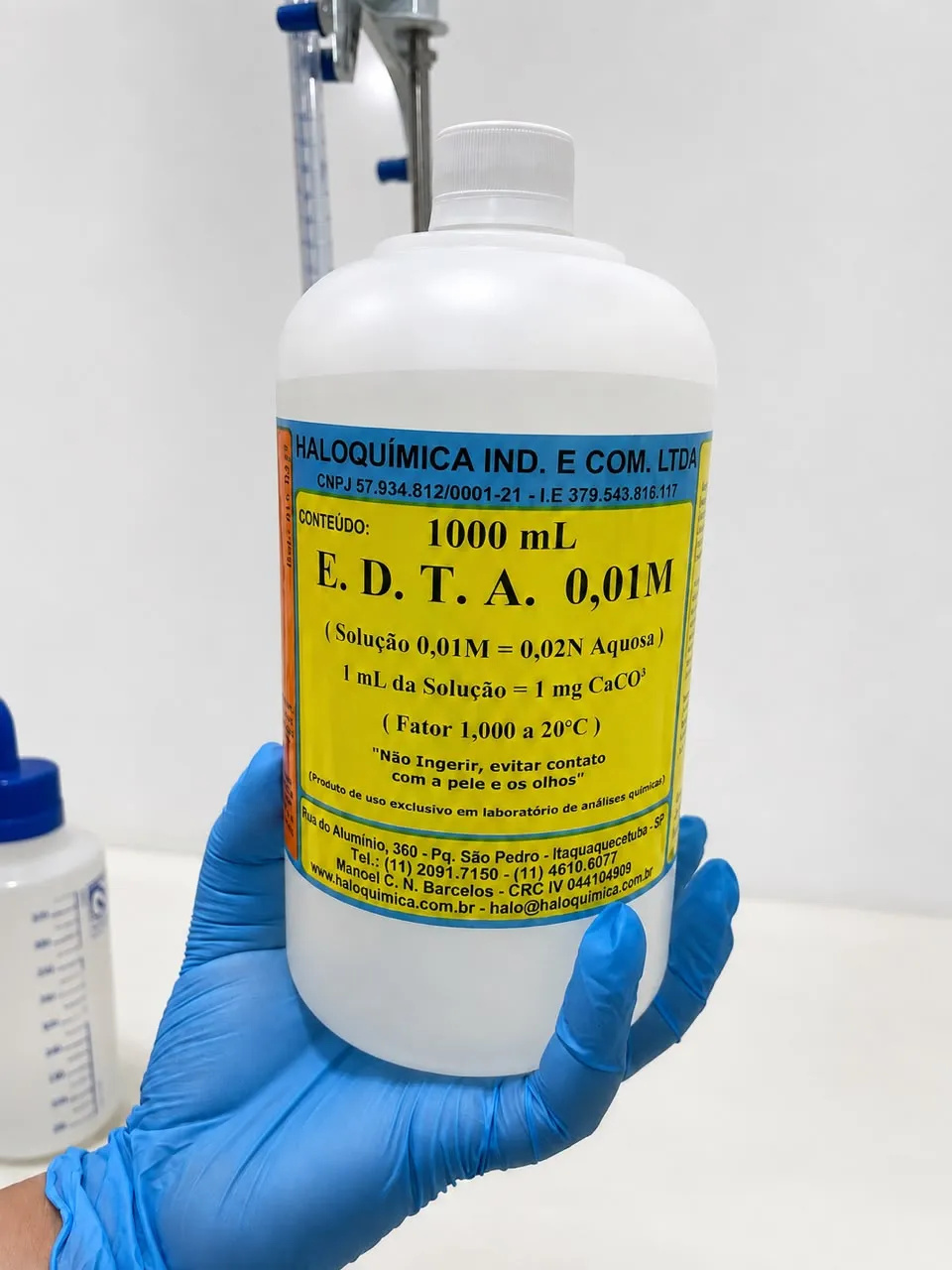
EDTA (solution) acts as a chelating agent, forming stable complexes with metals such as calcium, magnesium, iron, copper, and zinc. For that reason, it is widely used in analytical methods that need to identify, neutralize, or quantify metal ions with precision.
In practice, using EDTA solution helps reduce chemical interference and improve result repeatability. In quality control laboratories, that predictability is decisive for keeping consistent analytical standards.
Quality criteria when choosing the reagent
Choosing EDTA (solution) should consider concentration, purity grade, traceability, technical documentation, and compatibility with the method used. Special, titrated, or standardized chemical solutions require careful preparation, technical checking, and proper storage.
Some points deserve attention at the time of purchase:
- Defined concentration: favors greater control in volumetric assays.
- Technical documentation available: facilitates internal validations and audits.
- Reliable standardization: reduces deviations in recurring analyses.
- Specialized support: helps select the solution best suited to the procedure.
When to use EDTA (solution) in chemical analyses?
EDTA (solution) is indicated when metals need to be complexed in aqueous medium, mainly in complexometric titrations. It can also be used in laboratory formulations, stability studies, analytical treatments, and processes that require metal ion control.
Performance depends on concentration, medium pH, sample matrix, and method conditions. That is why a technical supplier is essential to avoid incompatibilities and rework.
Count on Haloquímica for reliable chemical solutions
Haloquímica offers EDTA (solution) and other laboratory reagents focused on quality, documentary safety, and technical support. Talk to our specialists and find the solution best suited to your application.
Contact us