



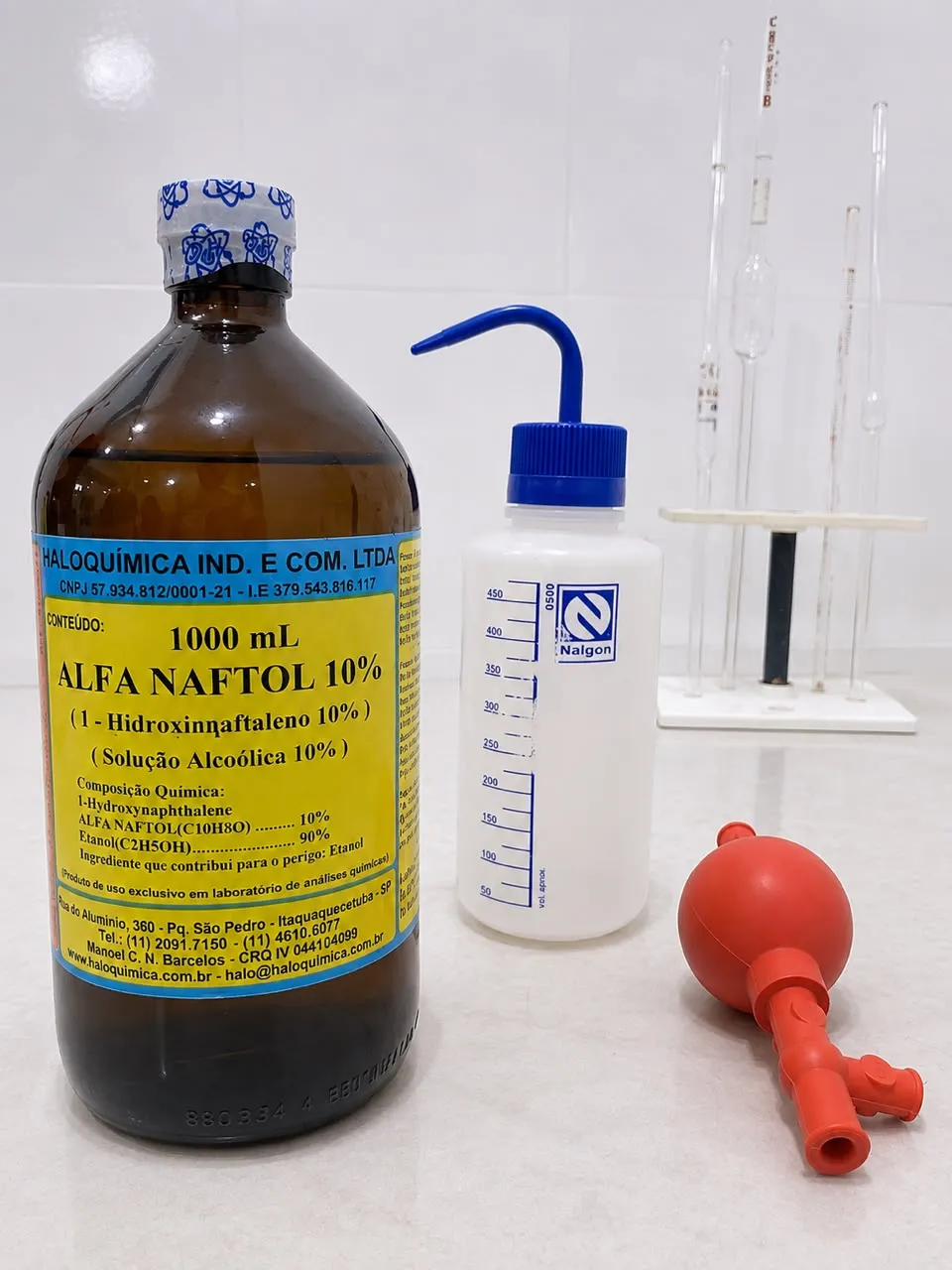
Technical laboratory applications
Alpha-naphthol can be used in classic identification assays, such as the Molisch test for carbohydrates and the Sakaguchi test for arginine in proteins. It also acts as an intermediate in organic syntheses, including routes linked to azo dyes and other compounds of industrial interest.
In practice, selection requires attention to purity grade, technical documentation, and compatibility with the method applied. Small variations in reagent specification can compromise analytical results, especially in quality control, applied research, and formulation development.
Some points should be evaluated before purchase:
- Purity grade: directly influences assay precision and result repeatability.
- Technical documentation: facilitates internal validation, batch control, and regulatory compliance.
- Storage conditions: help preserve stability, integrity, and safe handling.
- Specialized support: reduces mistakes in reagent selection and speeds up specific demands.
Reagent handling precautions
As a chemical substance with associated hazards, alpha-naphthol must be handled according to the SDS and internal safety rules. Safety data sheets indicate danger in case of ingestion, skin contact, skin irritation, serious eye damage, and possible respiratory irritation.
Using PPE, a fume hood, and suitable containers contributes to a safer routine. It is also important to check incompatibilities, proper disposal, and transport requirements before adding the product to technical stock.
Request alpha-naphthol with Haloquímica technical support
To purchase alpha-naphthol with safety, traceability, and specialized guidance, count on Haloquímica. Our specialists help select the right reagent, provide technical documentation, and meet specific laboratory demands.
Contact us