



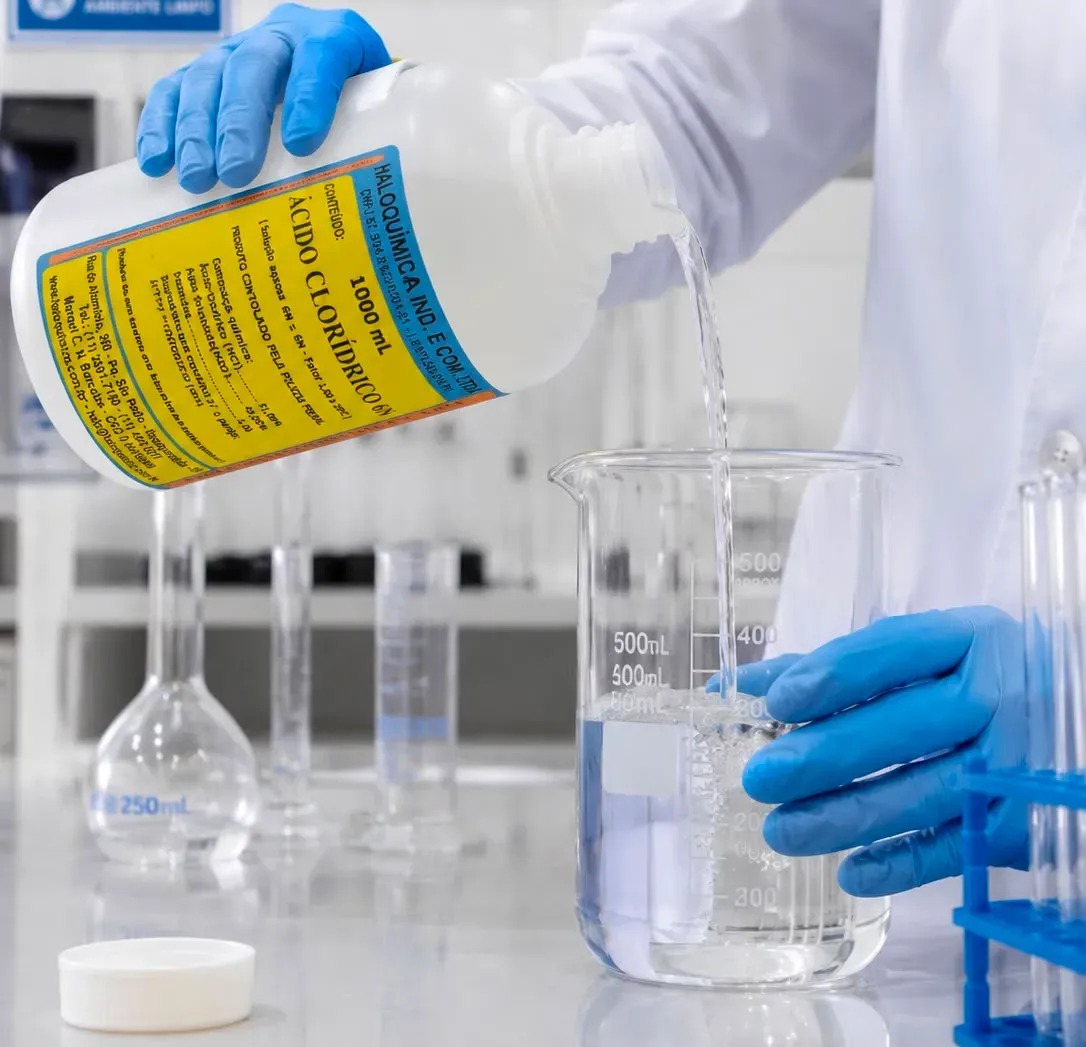
How to evaluate acids for laboratory use?
Selecting acids must consider more than the chemical formula. In analytical applications, small variations in concentration or the presence of impurities can compromise results, calibrations, and comparative assays.
That is why it is important to check certificates of analysis, safety data sheets, batch, shelf life, standardization, and storage conditions. These criteria help maintain procedure reliability and reduce operational risks in controlled environments.
Some points deserve attention when purchasing and using acids technically:
- Adequate purity grade: directly influences analysis precision and solution stability.
- Complete documentation: facilitates audits, internal control, and compliance with safety standards.
- Compatible concentration: prevents deviations in titrations, dilutions, and laboratory preparations.
- Regular supply: supports purchasing planning and continuity of routines.
Technical applications of acids
Acids can be used in sample preparation, pH adjustment, chemical cleaning, synthesis, neutralization, acid digestion, titrations, and specific formulations. Each application requires prior analysis of concentration, reagent type, and compatibility with glassware, equipment, and other substances involved.
In industrial and laboratory processes, standardized acids or titrated solutions offer greater control over analytical performance. This is essential when repeatability, traceability, and technical compliance are required.
Safety and storage of acids
Handling acids requires clear procedures, PPE, compatible containers, and storage in ventilated, labeled areas away from incompatible substances. The safety data sheet should guide containment, internal transport, and disposal measures.
In addition, controlling shelf life and packaging integrity prevents losses, contamination, and concentration changes.
Count on technical support to choose acids safely
Haloquímica supplies acids and chemical solutions focused on quality, precision, and technical support. Talk to our specialists to find the reagent best suited to your application.
Contact us